



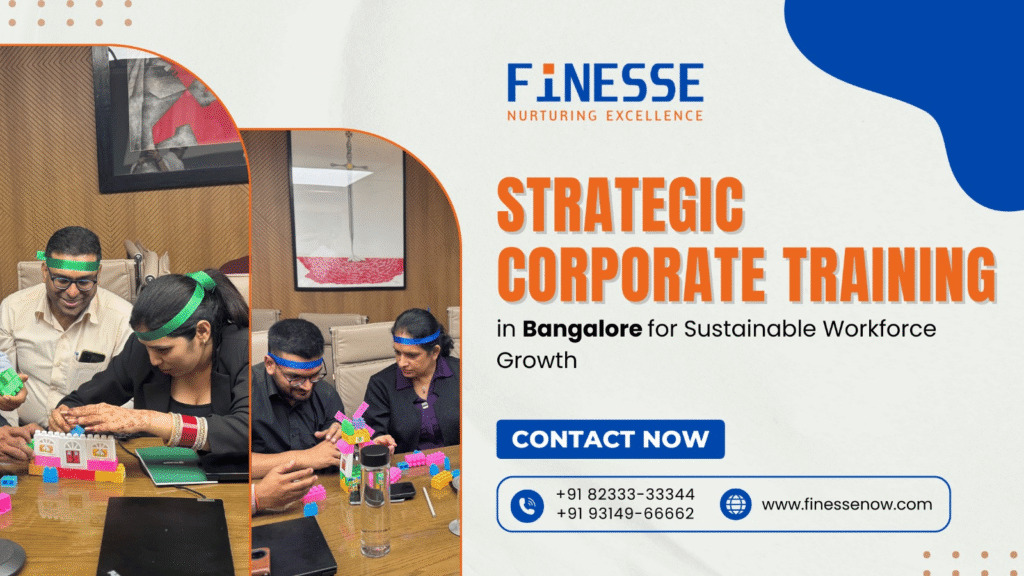
Bangalore grows fast, so companies must grow smarter. Corporate training in Bangalore supports long-term workforce strength because skills change quickly. Also, competition increases daily, but people decide their own success. Therefore, strategic training shapes confident teams who adapt and perform. However, random workshops fail to deliver value. In addition, structured learning builds future leaders and steady growth because employees feel invested. Companies now seek clear direction, strong managers, and scalable talent pipelines. So, training must align with business goals and people’s needs. Corporate training in Bangalore helps organisations stay relevant, resilient, and ready for change in a demanding market.
Understanding the Need for Strategic Corporate Training in Bangalore
Strategic training starts with clarity because Bangalore’s workforce demands future-ready skills. Also, companies must understand people gaps before investing. Therefore, a structured approach matters.
- Talent Gaps: Skill gaps slow growth, but targeted programs close them quickly. So, corporate training in Bangalore helps teams upgrade abilities aligned with business demands and roles.
- Market Speed: Markets shift fast, so employees need updated skills. Also, regular learning helps teams respond confidently to new technologies and customer expectations.
- Workforce Diversity: Bangalore hosts diverse talent, but learning styles differ. Therefore, strategic training balances inclusivity, collaboration, and consistent performance standards.
- Employee Retention: People leave when growth stops, but learning keeps them engaged. So, training builds loyalty and reduces hiring pressure significantly.
- Leadership Pipeline: Future leaders need early grooming because promotions happen fast. Also, planned learning ensures smooth leadership transitions without disruption.
Transforming Corporate Training into a Strategic Business Investment
Training becomes powerful when leaders treat it as an investment. Also, structured planning connects learning with results. Therefore, strategy replaces guesswork.
- Goal Alignment: Training works best when linked to goals. So, corporate training in Bangalore connects employee development directly with business priorities and performance metrics.
- Measurable Impact: Companies track ROI because numbers guide decisions. Also, measurable learning outcomes justify budgets and improve future programs.
- Culture Building: Learning shapes culture, but consistency matters. Therefore, ongoing training builds accountability, trust, and shared values across teams.
- Leadership Focus: Programs that improve leadership skills create confident decision-makers. So, businesses gain stability and direction through focused leadership training.
- Long Vision: Short courses help, but long plans sustain growth. In addition, strategic learning supports expansion and workforce maturity.
Ensuring Workforce Scalability Through Long-Term Training Planning
Scalability requires people who grow with the company. Also, long-term training supports smooth expansion. Therefore, planning reduces future stress.
- Skill Forecasting: Companies predict future skills because roles evolve. So, corporate training in Bangalore prepares employees for upcoming responsibilities proactively.
- Structured Pathways: Clear learning paths guide employees forward. Also, structured development improves confidence and reduces confusion during role changes.
- Leadership Readiness: Growth needs ready leaders, not rushed ones. Therefore, leadership development program designs ensure continuity and stable team management.
- Knowledge Retention: Trained employees stay longer because they see growth. In addition, retained knowledge strengthens internal capability and reduces dependency.
- Change Support: Change creates fear, but training builds comfort. So, teams adapt faster during mergers, scaling, or process shifts.
Strengthening Managerial Effectiveness Through Capability-Based Training
Managers drive daily performance, so their capability matters. Also, focused learning builds practical leadership strength. Therefore, capability-based training delivers real outcomes.
- Decision Skills: Managers make daily choices, but training sharpens judgement. So, managerial training supports confident, timely, and balanced decision-making.
- People Management: Handling teams requires empathy and clarity. Also, leadership training helps managers motivate, guide, and resolve conflicts effectively.
- Performance Coaching: Managers coach better with tools. Therefore, training improves feedback quality and boosts employee productivity consistently.
- Strategic Thinking: Managers think beyond tasks because strategy matters. In addition, corporate leadership programs strengthen long-term planning and accountability.
- Communication Power: Clear communication reduces errors, but skills need practice. So, training builds influence, clarity, and trust across teams.
Customised Training Solutions to Address Industry-Specific Challenges
Every industry faces unique challenges, so training must adapt. Also, customised programs deliver relevance and faster impact. Therefore, one-size solutions fail.
- Industry Context: Training reflects industry realities because relevance improves learning. So, corporate training in Bangalore adapts content to specific operational needs.
- Role-Based Design: Different roles need different skills. Also, tailored modules address exact responsibilities without wasting time.
- Practical Scenarios: Real scenarios improve understanding, but theory alone fails. Therefore, experiential learning builds confidence and application.
- Leadership Focus: Custom programs improve leadership skills aligned with industry demands. In addition, the focused leadership development program ensures contextual leadership strength.
- Flexible Delivery: Flexible formats suit busy teams. So, blended learning increases participation and consistent skill adoption.
Partner with Finesse to build future-ready teams through strategic, customised corporate training in Bangalore that drives sustainable workforce growth.